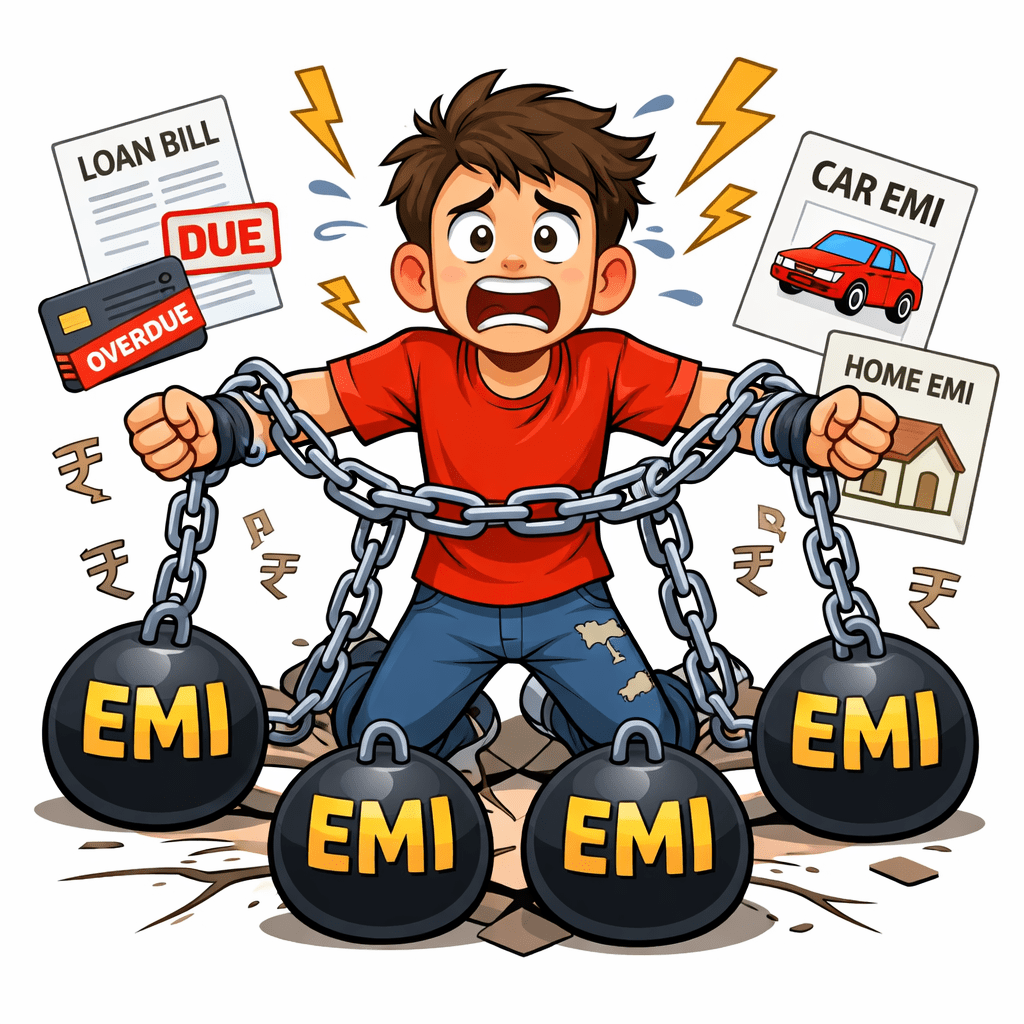
India’s young professionals are earning more than previous generations, enjoying unprecedented access to credit, and living in a world driven by convenience. Smartphones arrive the next day, loans are approved in minutes, and almost every purchase can be converted into an EMI. Yet behind this modern financial comfort lies a growing problem — young Indians are slipping into debt faster than ever before.
The reason is not a lack of income, but a mindset shaped by easy EMIs, instant gratification, and low financial awareness. Welcome to what experts now call the EMI Trap.
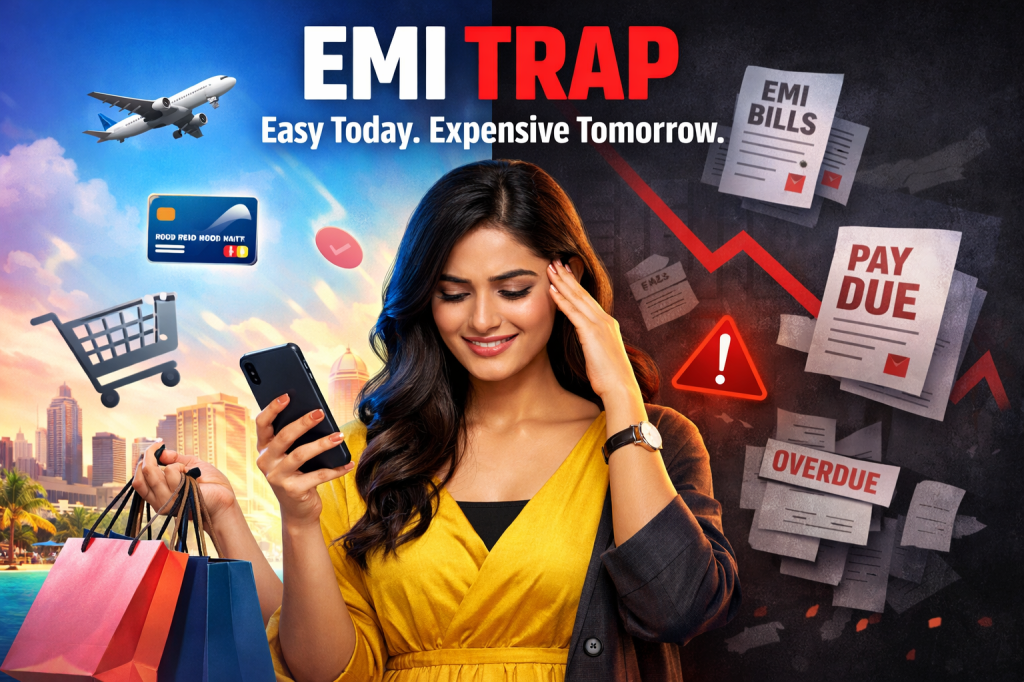
The Rise of the ‘Lifestyle EMI’ Culture
Not long ago, EMIs were reserved for big-ticket necessities — homes, two-wheelers, or cars. Today, almost everything comes with a “Pay ₹1,499 per month” option:
- Smartphones and laptops
- Earbuds and smartwatches
- Furniture and home appliances
- Travel packages and staycations
- Gym memberships and online courses
- Even groceries and food orders
The psychology is simple:
“If I can afford the monthly installment, I can afford the product.”
What gets ignored is the total cost, not just in money, but in future flexibility. Multiple small EMIs silently stack up, consuming a large part of monthly income without being noticed — until it’s too late.
Easy Credit, Hidden Consequences
India’s fintech boom has made borrowing frictionless. With instant approvals, minimal documentation, and app-based lending, credit is now easier to access than ever.
But this convenience hides serious costs:
- Processing and convenience fees
- High interest on small-ticket personal loans
- Late payment penalties
- Credit card revolving interest (often 36–42% annually)
- BNPL charges once the “free” period ends
One missed EMI can trigger a chain reaction — penalties, interest, and credit score damage — pulling borrowers deeper into debt.
Social Media, Peer Pressure, and Financial Overstretch
Instagram lifestyles, influencer culture, and peer competition fuel unrealistic expectations.
A new iPhone.
A weekend getaway.
Branded clothes.
Frequent dining out.
EMIs make these purchases feel affordable today, but expensive tomorrow. Many young professionals stretch beyond their income levels to “keep up,” resulting in high debt-to-income ratios and almost no room for savings or emergencies.
The Financial Literacy Gap
Despite being digitally savvy, a large section of young earners lacks basic financial knowledge:
- How interest actually works
- How to calculate the true cost of an EMI
- Why paying only the minimum credit card amount is dangerous
- How credit scores are built (and destroyed)
- How much debt is considered healthy
Without this foundation, marketing-driven offers and emotional spending decisions easily win.
Job Market Uncertainty Makes It Worse
Today’s job market is far from stable. Layoffs, contract roles, startup failures, and project-based work are becoming common.
EMIs, however, are fixed commitments.
When income becomes uncertain but expenses remain rigid, financial stress skyrockets. A single job loss can convert lifestyle debt into a long-term burden that takes years to recover from.
The Psychology Behind the EMI Trap
EMIs don’t just affect wallets — they reshape thinking.
Instead of asking,
“Can I afford ₹60,000?”
people ask,
“Can I afford ₹2,500 per month?”
This mental shift leads to:
- Compulsive and reward-based spending
- Underestimating long-term expenses
- Ignoring savings and investment goals
- Feeling falsely “in control” of finances
Fintech platforms understand this psychology well — and design products to exploit it.
When EMIs Kill Wealth Creation
Every rupee paid as interest is a rupee not invested.
Overuse of EMIs reduces the ability to build:
- Emergency funds
- SIP and mutual fund investments
- Insurance protection
- Retirement savings
Instead of earning compound returns, young professionals end up paying compound interest — delaying wealth creation by crucial early years.
How to Escape (or Avoid) the EMI Trap
Financial discipline doesn’t mean giving up comfort. It means choosing wisely.
✔ Follow the 30% Rule
Your total EMIs should not exceed 30% of monthly income.
✔ Separate Needs from Wants
Pause before converting non-essential purchases into EMIs.
✔ Pay Credit Card Bills in Full
Never revolve balances — the interest is brutal.
✔ Limit BNPL Usage
Too many apps = zero visibility on total debt.
✔ Build a 6-Month Emergency Fund
This protects you during job loss or medical emergencies.
✔ Invest Before You Spend
Automate SIPs so wealth creation becomes a habit, not an afterthought.
✔ Improve Financial Literacy
Understanding money basics is more powerful than earning more money.
Conclusion
EMIs have changed how India spends — but not always for the better.
Young professionals today are borrowing earlier, saving later, and carrying financial stress into the most productive years of their lives. Convenience has quietly replaced caution.
It’s time to rethink the “EMI lifestyle.”
Because true financial freedom isn’t about buying more today —
it’s about having choices tomorrow.
 Aditi Mathur | Educator & Researcher